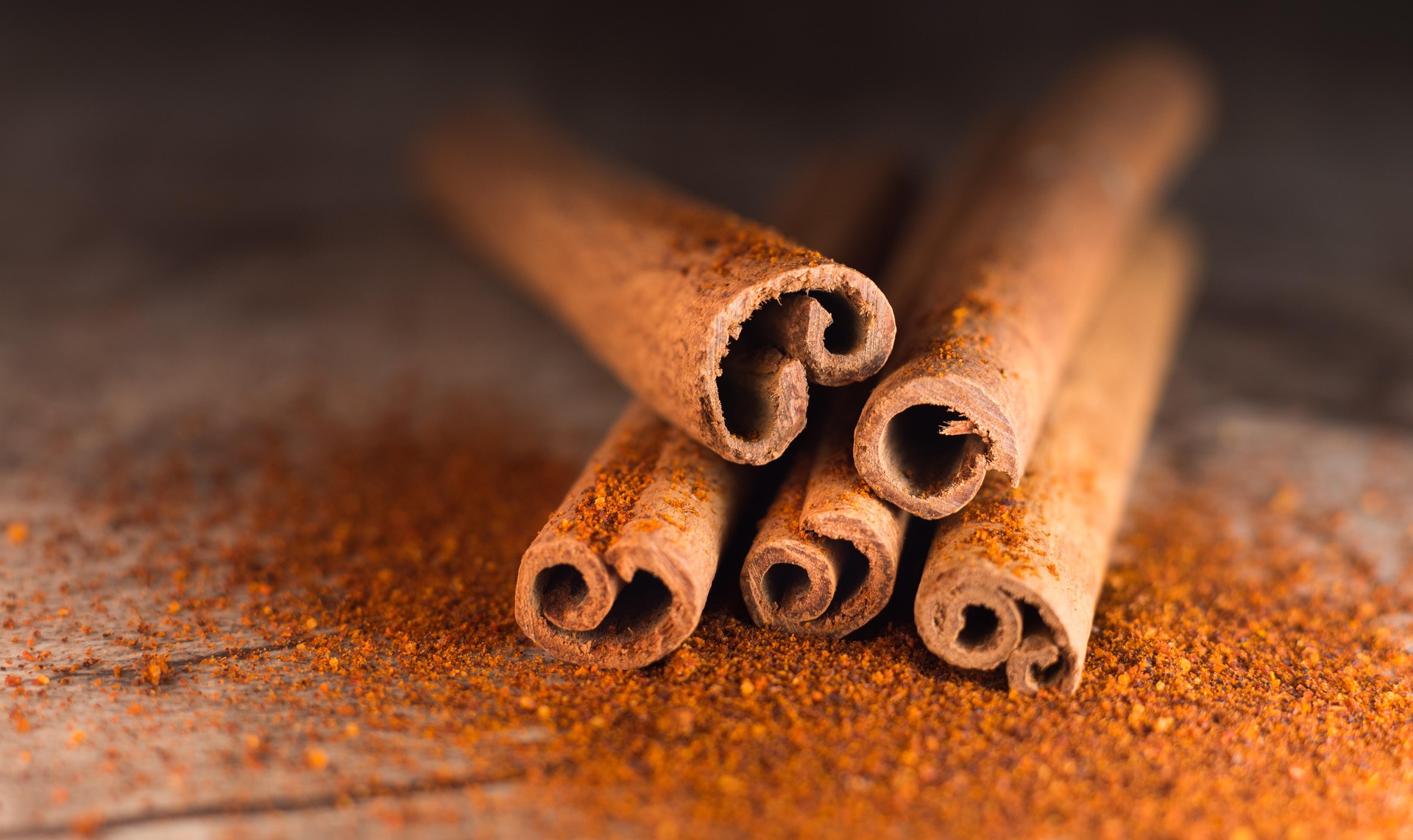
What has quills, was the root of colonial wars, and is a staple in both Ayurvedic and Traditional Chinese Medicine? That’s right – from pharaohs to prophets to Portuguese conquerors, cinnamon has been spicing up our food and bestowing medicinal and cosmetic properties in human culture for millenia (Cinnamon, n.d.; Eisenreich & Schäfer, 2023). Traditionally used for its anti-inflammatory properties and calming effects on gastrointestinal troubles, today the therapeutic benefits of cinnamon are attributed to its bioactive components, the most prominent of which is cinnamaldehyde.
A brief introduction
Originally from Sri Lanka, cinnamon trees have now been introduced to many (sub)tropical countries including Vietnam, Borneo, Brazil, Southeast China, Madagascar (Cinnamon, n.d.). Cinnamon powder – made from grinding the bark of the cinnamon tree – is a familiar kitchen spice to many, however the leaves and their resultant oil (rich in eugenol) are also used extensively in the food, cosmetics and perfume industries (Ju et al., 2023). Most recipes for home cooks utilise ground cinnamon or cinnamon quills – the curled, dry bark. Of the numerous varieties of cinnamon that exist, the most important commercially are Cinnamomum verum – also called ‘true cinnamon’, formerly known as Cinnamomum zeylanicum (meaning ‘from Ceylon’, or Sri Lanka) – and Cinnamomum cassia (Cassia Cinnamon). The specific growing conditions and variety of cinnamon have a large impact on the chemical composition of the resultant plant parts, and consequently any potential health impact (Campos-Vega & Oomah, 2022; Habtemariam, 2019).
Benefits and blunders of botany and biology
Cinnamon has been studied in relation to type 2 diabetes, cardiovascular disease, some cancers, microbial and viral infections, and even some neurodegenerative diseases (e.g. Alzheimer’s and Parkinson’s) (“Bioactive Compounds in Cinnamon,” 2022; Das et al., 2022; Habtemariam, 2019; Rao & Gan, 2014; Williams, 2021). While this is very exciting, there are some important points to note about the research to date:
- Heterogeneity – studies in humans vary enormously in the size of the population samples, study duration, dosage (from 1 gram to 14.4 grams daily), substance used (oils, ground cinnamon, and extracts), study protocols and methodology, and – importantly – the source of the cinnamon (Habtemariam, 2019).
- Cinnamon is generally considered low-risk, with a few notable exceptions. As with so many things, excessive consumption can lead to various complications and unpleasantries. The ill-advised ‘Cinnamon Challenge’ is a good example of when common sense should prevail, however what may be less obvious is one of the most commonly available (i.e. cheapest) forms of cinnamon powder, Cinnamomum cassia and Cinnamomum loureiroi, contains the highest amounts of coumarin, which can be problematic for your liver (a hepatotoxin) (Ju et al., 2023). Coumarin is naturally occurring in many plants and is well-known for its anti-inflammatory, antioxidant, and antimicrobial properties, however the levels in Cinnamomum cassia and Cinnamomum loureiroi are particularly high and best avoided by children or those with liver damage or disease.
Cardiovascular disease
Cinnamon has shown potential to reduce blood pressure (hypertension), lower cholesterol levels and protect against reduced blood flow through one or more arteries (myocardial ischemia), however clinical trials in humans are limited (Das et al., 2022).
Microbial infections
Broad-spectrum antimicrobial activity against various bacteria, fungi, and yeasts – including some drug-resistant strains – has been shown by cinnamon and its essential oils (“Bioactive Compounds in Cinnamon,” 2022; Rao & Gan, 2014; Williams, 2021), however clinical trials in humans are limited.
Cancers
In vivo, in vitro and animal studies show encouraging results for cinnamon’s bioactive components to inhibit the growth of cancer cells (inhibiting angiogenesis, modulating immune responses, and inducing apoptosis), and preliminary research in humans for colon cancer is promising (Ju et al., 2023; Williams, 2021).
Neurodegenerative diseases
Emerging evidence (primarily in animal models and in vitro studies) suggests that cinnamon might have neuroprotective effects and could benefit conditions like Alzheimer’s disease, Parkinson’s disease, and multiple sclerosis. The bioactive components of cinnamon may play a role in inhibiting the formation of toxic protein aggregates, reducing inflammation in the brain, and enhancing cognitive function (“Bioactive Compounds in Cinnamon,” 2022; Ju et al., 2023; Williams, 2021).
Incorporating cinnamon into your diet
Few ingredients are as delightful to add to your diet as cinnamon! Cinnamon is easily incorporated into many drinks, breakfasts and baked goodies – so here’s some inspiration!
Practical tips
At home
- Wherever possible, purchase Cinnamomum verum. Sometimes the easiest thing to do is to find cinnamon that was grown in Sri Lanka, as package labelling can be a little inadequate.
- Store cinnamon in a dark, cool place (but not the freezer!), away from direct sunlight and sources of heat. Ironically this may mean reconsidering where your spice rack is placed, as too close to the stove and other heat sources is detrimental to the bioactive components of most spices.
Eating out
Most encounters you have with cinnamon outside the home are likely to be with Cinnamomum cassia. As an occasional event, it’s unlikely to have a major impact on your life or health.
Conclusion
While not a cure for type 2 diabetes, cancer, or any other disease, cinnamon is a delicious and beneficial addition to most people’s diet – especially if you can find Cinnamomum verum. Large-scale, robust studies in humans for naturally occurring foods (like spices) tend to lag behind high-profit potentials that can be funded by ‘Big Pharma’, however further research based on well-designed, long-term clinical trial would be welcome to clearly articulate optimal dosage and efficacy of disease prevention and humans for this spice. In the meantime, it’s probably worth settling down with something warm, flavourful and spicy while we wait.